Friday, June 30, 2023
Early Wars Causing Lithuanian Jews to Flee to Ukraine
Nadene Goldfoot

In 1432 -1438 there was war in Lithuania. It was Lithuania and Poland against Russia.
From 1487-1494 a 2nd war was fought; the Lithuanian Muscovite War of Lithuania, the Golden Horde against Moscow.
From 1492-1537, the war raged on as the Muscovite-Lithuanian wars of Lithuania and Moscow. (1492 when Columbus sailed the ocean blue) and Jews had to leave Spain, start moving all over trying to find a home...
By 1495, Jews were living in Vilna, Grodno and Kovno totaling 10,000.
1508 was the Glinski Rebellion against Lithuania by Glinski supporters
1524 was the big Ottoman-Tartar invasion of Lithuania and Poland
1561to 1570 was the Northern 7 Years War of Lithuania/Poland against Sweden
They received a charter in 1529 guaranteeing freedom of movement and employment. Soon they were the leading workers in foreign trade and taxing and farming. However, from 1495-1502, the first 7 years of being in Lithuania, they were excluded FROM Lithuania. In 1566-1572, the Jewish badge was introduced for Jews to wear to distinguish themselves from citizens. Jews were disqualified in the court system for giving evidence.

1576 to 1582 was the Livonian War of everyone (Lithuania/Poland/Sweden, Norway, Denmark, Transylvania); being against Tsardom of Russia
1600-1629 was again the Polish-Lithuanian Commonwealth and Swedish War and 1605-1618 included war against Russia and 1606 -1608 the Zebrzydowski Rebellion of nobles against the king.
Organization took place. Jews were represented in the COUNCIL OF THE FOUR (then 5) LANDS, but that wasn't helping, so the Jews formed a separate COUNCIL OF LITHUANIA in 1623 when a separate tax-system was established.

By 1762, Catherine II permitted all aliens to live in Russia, except Jews. Partitions of Poland, resulting from wars, took place in 1772, 1793, and 1795, when the large group of White Russian Jews, Ukraine, Lithuania and Courland became Russian subjects. For more than a century, they were all under the reactionary rule of the Czars.
Lithuania became part of Russia in 1795 which lasted until WWI of 1918. It had become a major part of the Jewish culture so was most important. It was the home of distinguished yeshivote (Jewish schools) and leading rabbis such as the Gaon of Vilna. It became the seat of MUSAR movement, and a center of Haskalah.
During World War I, 100,000 Jews were expelled or actually emigrated to the Russian interior, leaving their shtetles. In independent Lithuania, Jews received national autonomy from 1918- 1924. A Jewish National Council was established under a Ministry for Jewish Affairs. They had the right to levy taxation under government auspices.
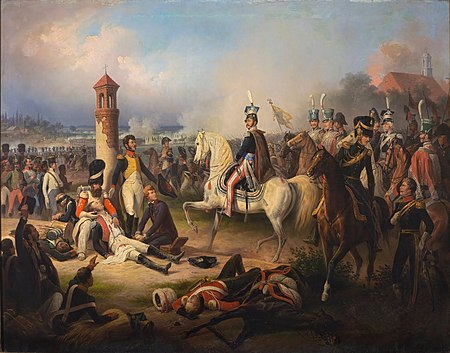
The Austro-Polish War or Polish-Austrian War was a part of the War of the Fifth Coalition in 14 April 1809 (a coalition of the Austrian Empire and the United Kingdom against Napoleon's French Empire and Bavaria). It ended October 14, 1809. It lasted 6 months.

Vilna, the largest city as well as capital, was lost to Poland in 1919, the result of WWI. This weakened the Jews of Vilna. After 1924, autonomy was restricted solely to religious matters, while the economic position of the Jews deteriorated in the oncoming years.

No Jews survived the expulsion of Jews of 1290 when Jews were also expulsed from England. A few former Marranos settled in Dublin after 1660 and more arrived as military purveyors after the 1689 revolution. Original Jews were displaced by Ashkenazim, but by 18th century, population declined and by 1816 there were only 3 Jewish families in Dublin and a few in other Irish towns. They were joined by others in 1822 and the population was 400 by 1880. Emigration from Eastern Europe took place at the end of the 19th century and many went to Dublin, Cork, Waterford, Limerick, Belfast. the chief rabbinate was founded in 1918 being Yitzhak Halevi Herzog with the Jewish population in 1990 at 1,600, mainly in Dublin,
Many Jews of Lithuania moved on to Dublin, Ireland and from there, to South Africa which Jews started settling in the early 19th century. Capetown had a synagogue by 1841. The settlers were traders and peddlers who traveled among the Boer farmers. Later they went to the towns. Gold was discovered there in the end of the 19th century, which eastern European Jews which drew many. Johannesburg became the main Jewish settlement, and they enjoyed the political equality in Cape Colony and Natal, but obtained it in the Transvaal only after the 2nd Boer War. Immigration to South Africa was popular following WWI and came mostly from Lithuania.

I know that Simon Goldfoot moved from Lithuania to South Africa in the 20's. His son, Stanley Goldfoot b: May 2, 1914, was born there in Houghton, Johannesburg, South Africa. Immediately after graduation high school, he made Aliyah to Palestine, and he lived in Jerusalem, becoming the Chief of Intelligence for the Stern Group which the British called the Stern Gang.

Polish–Lithuanian Conflict) was an undeclared war between newly independent Lithuania and Poland following World War I, which happened mainly, but not only, in the Vilnius and Suwałki regions. The war is viewed differently by the respective sides. According to Lithuanian historians, it was part of the Lithuanian Wars of Independence and lasted from May 1919 to 29 November 1920. Polish historians deem the Polish–Lithuanian war as occurring only in September–October 1920. Since the spring of 1920, the conflict became part of the wider Polish–Soviet War and was largely shaped by its progress. It was subject to international mediation at the Conference of Ambassadors and the League of Nations.
Though most emigration from Lithuania went to Israel, it is now going to other English-speaking countries. The rabbis of the principal congregations in Johannesburg (Jewish population was 63,620. Cape Town of which Cape Peninsula had 28,000. Chief rabbis and 65 synagogues are affiliated to the Orthodox Federation of Synagogues. A Reform Movement started in 1933 and has 14 affiliated congregations. Also, there are 69 nursery schools, 10 primary schools and 8 high schools. They have an extensive Jewish press and a lot of cultural activities. By 1990 there were 120,000 Jews living in South Africa.
In 1923, there were 300 Jewish elementary schools, the majority teaching in Hebrew, a minority in Yiddish (Hebrew-German Combo).
Jews of Central Europe in the 14th and 15th centuries immigrated to Ukraine and from Poland in the 16th to 17th centuries. Severe massacres happened during the Chmielnicki and the Haidamak uprising in the 17th to 18th centuries.
The Frankist and Hasidic movements originated in the 18th century in Ukraine which was also associated with the early Zionism in the 19th-20th centuries. Jews of Galicia and White Russia had emigrated there.
The Soviet Government promoted Jewish settlement in the Ukraine in the 1920's, however. They used the funds of the American Joint Distribution Committee in the regions of Kalinindorf, Zlatopol, and Stalindorf. By 1930 there were 90,000 Jewish agriculturists there. In January 1918 , a regime of national autonomy was estalished in the Ukraine. Jewish economy and culture suffered under Soviet rule. About half of Soviet Russia's 3 million Jews lived there before WWII. Under Nazi rule, the Jewish people who had not fled to Russia were wiped out by the Germans and Ukrainians from 1941 to 1942. The Jewish population was officially put at 777,126 in 1970 and at 484,129 in 1989.
There were restrictions on them imposed during the 1930's limited the influx (when Germany and Nazism were affecting all countries towards Jews), although many German Jews were able to settle in South Africa. After 1939, however, Jewish immigration was small to nothing. It has increased again in the late 1980's. .jpg%20invasion%20of%20Poland.jpg)
In 1939 when Germany marched into Poland, starting WWII, the Jewish population numbered about 175,000. About 25,000 were deported by the Russians from Lithuania and Latvia in July 1940. The remaining Jews were massacred by the Germans and Lithuanians by 1943. 24,000 Jews were living there in 1959, but by 1989 about half of these had left for Israel, leaving 12,312. Today of 2023 there are 52,300. I presume most have made aliyah to Israel.
Jews of Central Europe in the 14th and 15th centuries immigrated to Ukraine and from Poland in the 16th to 17th centuries. Severe massacres happened during the Chmielnicki and the Haidamak uprising in the 17th to 18th centuries.
The Frankist and Hasidic movements originated in the 18th century in Ukraine which was also associated with the early Zionism in the 19th-20th centuries. Jews of Galicia and White Russia had emigrated there.

Ukraine was the center of anti-Semitism. It was the scene of pogroms in 1905 and 1918 to 1920. Fiddler on the Roof was situated in Ukraine. As the play begins, Tevye, a Jewish milkman, tells of the customs in the little Russian town of Anatevka. It is 1905, and life here is as precarious as a fiddler on the roof, yet, through their traditions, the villagers endure. Anatevka (Ukrainian: Анатевка) is a Ukrainian refugee village that provides food, housing, education, and medical support for refugees resulting from the 2014 Russian invasion and the 2022 Russian invasion of Ukraine. The village was established in 2015 and currently houses hundreds of families.
The Soviet Government promoted Jewish settlement in the Ukraine in the 1920's, however. They used the funds of the American Joint Distribution Committee in the regions of Kalinindorf, Zlatopol, and Stalindorf. By 1930 there were 90,000 Jewish agriculturists there. In January 1918 , a regime of national autonomy was estalished in the Ukraine. Jewish economy and culture suffered under Soviet rule. About half of Soviet Russia's 3 million Jews lived there before WWII. Under Nazi rule, the Jewish people who had not fled to Russia were wiped out by the Germans and Ukrainians from 1941 to 1942.

The Jewish population was officially put at 777,126 in 1970 and at 484,129 in 1989. Volodymyr Oleksandrovych Zelenskyy (also transliterated as Zelensky or Zelenskiy; born 25 January 1978) is a Ukrainian politician and former comedian and actor who is the sixth and current president of Ukraine since 2019.
Reference;
https://katz.sas.upenn.edu/resources/blog/ironies-history-ukraine-crisis-through-lens-jewish-history
https://wisevoter.com/country-rankings/jewish-population-by-country/
https://en.wikipedia.org/wiki/Austro-Polish_War
https://en.wikipedia.org/wiki/Polish%E2%80%93Lithuanian_War
Labels: Anaatevka, Catherine II, Czars, Dublin, Gaon of Vilna, Lazdijai, Poland, Russia, South Africa, Soviets, Tartar, Telsiai, Ukraine, Vilna


The Towns of Telsiai, Lazdijiai, Papile, Augustowa and Vilnius and Seltz and Counties, Territories of Lithuania and Importance in Our Genealogy
Nadene Goldfoot


Suwalki is where Nathan Goldfoot's wife, Zlata Jermulowski was from (yellow section). She actually lived in Lazdijai, Suwalki, Lithuania/Poland as it had then been taken over by Poland. Lazdijai was on the border. From 1855 to 1857, Lazdey's Jewish population was 1,546, which was 60% of the town. By 1897 it had dropped a little to 1,439 which was 57% of the population. Lazdijai has been a part of Poland though originally it was part of Lithuania. Lazdijai (Lazdey)54*14/23*31' According to contemporary Russian Empire statistics, from 1889 the Suwałki Governorate was predominantly Lithuanian since they comprised 57.8% of the population. Lithuanians formed a majority only in the northern part of the governorate in the counties of Kalvarija, Marijampolė, Naujamiestis, Vilkaviškis as well as the eastern part of the Sejny county.
Augustowa is where a new DNA match, R. Freedman's grandfather-Hayman Freedman was from. Hayman came to the US in 1881. At the time, Augustowa was in Suwalki which is now part of Poland.. Augustów ([au̯ˈɡustuf] ( listen); Lithuanian: Augustavas, formerly known in English as Augustovo or Augustowo) is a town in north-eastern Poland. It lies on the Netta River and the Augustów Canal. Coordinates: 53°50′37″N /22°58′46″E. Poles were in a majority in the southern part of the governorate in the counties of Suwałki, Augustów and in the western part of the Sejny county.

Augustów actually is a resort town in northeastern Poland on the Netta River. It's known for its therapeutic spas. Flanked by lakes, the town also borders the Augustów Primeval Forest. At the junction of the river and the Augustów Canal, the Augustów Canal Museum traces the waterway’s 19th-century origins as a trade route. Forests and wetlands cover Biebrza National Park to the south and Wigry National Park north of town.
A town called Alytus or Alite was also in Suwalk Gubernia and in 1897 had a Jewish population of only 481 which was 33% of the town's population. Augustowa was not listed. Alytus (Alite)54*24'/24*03'
"In 1815, after the defeat of Napoleon, all of Lithuania was annexed to Russia, as a result of which Lazdey was included in the Augustowa Province (Gubernia), and in 1866 it became a part of the Suwalk Gubernia as a county administrative center."
During the years of its existence, Lazdey suffered from many fires.


Papile, Siauliai, Kaunas was home of the Gochin family of whom one matches our Goldfoot line. Siauliai County In October 1795, Catherine II of Russia granted Šiauliai the city rights and the privilege to become the capital town of the region. Administrative division of Russian Empire remained unchanged up to the end of World War I. When the war came to its end, in 1918 Lithuania was restored as an independent state. So Papile was the closest place to Telsiai, and that's how the Gochins and Goldfus got together. One of our female Goldfus married a Gochin. What we have in common is the interest and work of genealogy, so were able to match our findings, pretty good work for two 4th Jewish cousins.
Notice that there is the Telsiai and Siauliai endings. In Lithuanian, each noun has 7 endings for the singular and 7 for the plural. So the word "vyrai," "men," has the ending -ai that tells the reader that it is plural and the subject of a sentence, so it is in the nominative case. If the word was "vyru", it would mean "of or belonging to the men" -- the genitive case. Both endings build on the same root "vyr-". Some cities and towns are always plural, like Siualiai. In the Lithuanian phone book you will see "Siauliu r." This means in the region (rajonas) of Siauliai. The root of Siauliai is "Siaul-"Other towns or cities may have the nominative ending "-as," such as "Kaunas" or the ending "-is," such as Virbalis, or "-ys" as in Pasvalys. The roots of these names are "Kaun-", "Radvilisk-", and "Virbal-"


Map Treaty Brest-Litovsk Stock Photo - Alamy
| From the Jewish Encyclopedia, published by Brockhaus-Efron (volume 14, page 121). During the Polish rule, Seltz belonged to the Brisk [Brest] District of Lita. According to the resolution of “Vaad Medinat Lita” [Council of the State of Lithuania] from 1623, Seltz belonged to the district of Brisk. In his book, “A Voyage of Mission from Moscow to Poland (1678),” the diplomat Bernard Tanner describes Seltz as “a city built of wood and full of Jews.” In 1766, there were 260 Jews in the city. At the time of the 1877 census, there were 680 people. In the 1897 census there were 2648 residents in Seltz, of which 866 were Jews. |
As it turns out, R. Freedman and my brother, David, and I have a DNA match. R. and David both also belong to the Y haplogroup (male line) of Q which gives them another common DNA fact. It doesn't always happen that men from the same male line also are related by having common DNA segments as well. My brother's line of Q-M242 has been tested again in the big Y test as being listed as QBZ67, new title pinpointing where he is on the tree of life. R. Freedman also tested as Q-M242, same as David, so he may also be the same or just slightly different to show he's a Freedman and not a Goldfoot. This Jewish line of Qs makes up about 5% of the Jewish population which is 0.02% of the total world population. We are related to a lot of Freedmans of several different Y haplogroups.
When the Q group was first organized at Family Tree DNA, we discovered a group of us of Ashkenazi Jewish (Eastern European Jews) were Y-DNA Haplogroup Q which at the time was considered to have originated in Siberia. We wanted to know how this could be and we started this group to find out what we all had in common. We were originally one of the few groups focused on Jewish men and so we invited any Jewish person to join our group if they were interested in our common ancestral origins.
This group is specific to the branches of Q that are found in any and all Jewish Diaspora populations from Ashkenazi Jews in Europe to Yemeni Jews in Africa. While many people with these lineages may not be practicing the Jewish faith today, we come together to explore our common history and heritage.(Family Tree DNA)
Just for comparison with the above towns, the coordinates-Latitude and Longitude for Portland, Oregon are:45.5152° N, 122.6784° W
Resource:
Preserving our Litvak Heritage by Josesf Rosin; Joel Alpert, Editor, published by JewishGen,Inc.
https://www.tapatalk.com/groups/littlelithuania/ending-of-towns-in-ava-iai-t6819.html
https://en.wikipedia.org/wiki/Suwa%C5%82ki_Governorate
https://en.wikipedia.org/wiki/August%C3%B3w
Labels: Alytus, Augustow, Freedman, in Poland, Lazdijai, Napoleon, Papile, Seltz, Siauliai, Suwalki, Telsiai, Y haplogroup of Q
Friday, December 02, 2022
Our Bubba, Zlata Jermulowski/e Who Married Nathan Goldfus/Goldfoot and Her Hometown of Lazdijai, Suwalki, Lithuania
Nadene Goldfoot


Bubba insisted that she was a Litvak. On the map above is Telsiai, Lithuania where the Goldfus/foot came from. Suwalki became Polish territory. Lazdijai is a small town in Lithuania located about seven kilometres 4+1/2 mile east of the border with Poland. All of Bubba's records
have been found in Poland.
Bubba, (Zlata or Hattie) Jermulowske, was born on January 11,
1886 to Joshua and Esther:Descendants of Joshua Charles "Hatzkel" Isaiahel Jermulowskie
1 [1] Joshua Charles "Hatzkel" Isaiahel Jermulowskie b: 1850 in Lazdzieje, Suwalk Gubernia, Lithuania/Poland, Lazdijai, Suwalki, Russia/Lithuania d: Bet. 1895 - 1950 in Lazdzieje, Suwalk Gubernia, Lithuania Age at death: 45 est.
. +Esther "Essie" Decatsky Decad Frank b: Abt. 1860
in Lazdzieje, Suwalk Gubernia, Lithuania d: Abt. 1886 in
Stellingen, Eimsbüttel, Hamburg, Germany/ Lazdzieje, Suwalk
Gubernia, Lithuania m: Abt. 1876 in prob. Suwalki, Poland Age at death:6 est. m: Abt. 1876 in prob. Suwalki, Poland
*2nd Wife of [1] Joshua Charles "Hatzkel" Isaiahel Jermulowskie:
. +Dora Leah "Deborah" b: Abt. 1850 in "Russia" d:
Bet. 1895 - 1950 in Poland/, Russia m: Abt. 1888 in prob.
Suwalki, Poland/Russia Age at death: 45 est. m:
Abt. 1888 in prob. Suwalki, Poland/Russia
I have found a DNA match to Esther, Joshua's 1st wife, and it is Decatsky or Decad.
He turned out to be a friend already through genealogy, fantastic surprise.
Actually, Lazdijai (Lazdey) was parat of the Polish Lithuanian Kingdom until 1795,
when a 3rd division of Poland by the 3 superpowers occurred: Russia, Prussia and
Austria. It was then that Lithuania became part Russian and part Prussian. Laszdy
lay on the left side of the Nieman River went to Prussia (ruled from 1795-1807).
Lazdey was the country administrative center.
After 1815,all of Lithuania was annexed to Russia. Lazdey was included in the
Augustowa Province (Gubernia) and in 1866 became part of the Suwalk Gubernia
as an administrative center.
In 1872 was the Great Famine.
The city suffered from many fires. In the summer of 1879, about 200 houses were
ravished by fire and owners were then homeless. In 1888,70 houses burnt down and
a Jewish woman was a victim. 1886 was the birth of our grandmother! The town's
Jews suffered economically, which by 1887 amounted to about 1,500 souls.
Out of Bubba's siblings and half-siblings, she was the only one that could not read or
write. She had been the chief baby-sitter of her growing family.
People of Lazdijai mentioned in References
Altshuler, Eliezer Mordehai; established moving to Israel
Aranzon, Yosef-Mosheh (1805-1875) Rabbi, died in Chicago
Blumental, Hayim-Yehoshua HaCohen, 1853, Rabbi for several years
Decatsky (Decad)
Gershon, son of Moshe d: 1910: cemetery
Ginsburg, Yehudah-Leib, Rabbi
Glikman, Yehudah; money donation, (I had a Dr. Gluckman, is that close enough?)
Hayah, daughter of Rabbi Yudi Rosh HaGalil, d: 1897: cemetery
Kahana, Tsevi-Hirsh, Rabbi (interesting because our 3rd cousin, Stanley Goldfoot,
became close to Rabbi Kahana, who became infamous in Israel.
Meir, Rabbi Avraha;m Tsevi ben,
Reuven, son of Yehudah Frid, d: 1895: cemetery
Yaffe, Avraham-Eiver (1823-1908) Rabbi in Lazdey 1873-74)
Yehuda-Leib Yaffe, b:1842..? Rabbi from 1908 in Lazdey.
Yekhezkel, Rabbi Avraham ben; d: 1798, father- in -law of Yehudah-Leib,
son of the "Gaon" from Vilna (Stanley Goldfoot always thought we were related to the Gaon. )
Zilberman, Simkha; money donation.
Immigration
Our Bubba immigrated May 6, 1903 and wound up in Council, Idaho or near it in
a little mining town.
My grandmother Hattie"Zlotta" came over from "Russia" on May 6, 1903 along with
her sisters Jenny and Bessie. She was 17. Bessie was 21 or 20. Jenny must
have been about 11 years old. I have not found them in the Ellis Island Port yet.
On the Declaration of Intention paper, she said she came here via Hamburg,
Germany on the ship Altverten and landed in New York.
Her name was spelled Zlate Jemulosky on Dad's birth certificate. He was born at
277 Baker St, the residence his parents lived in. His name was Moses Goldfoot.
Resource:
https://en.wikipedia.org/wiki/Lithuania%E2%80%93Poland_border
Preserving Our Litvak Heritage, a history of 31 Jewish communities in Lithuania by Josef Rosin, by JewishGen.inc. (Book) p. 234--
https://www.jewishgen.org/Yizkor/telsiai/tel034.html: full of rabbis, etc.
Labels: history, immigration, Lithuania, Suwalki, Telsiai, Zlata Jermuilowske
Wednesday, June 01, 2022
MyTrue Short Story: True Love From Telsiai Never Dies
Nadene Goldfoot
True Love From Telsiai Never Dies
by Nadene Goldfoot
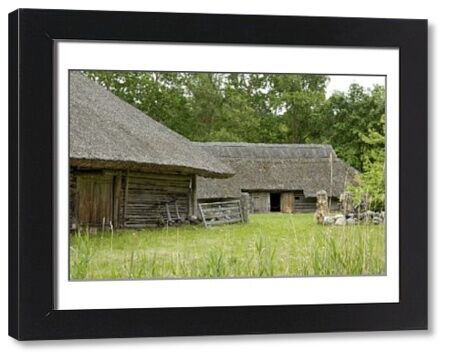
Leia noticed smoke coming from her wooden house. She ran to help put out the fire, but it grew worse and she backed off. Others came running. A house on fire among all the other wooden houses was deadly. To save theirs, they had to put out this fire. Luckily, they lived on the shores of Lake Mastis,, so water was nearby. They didn’t save the house, but saved the others this way.
The city was Telsiai, one of the oldest towns in Lithuania. Meier ran to Leia and hugged her, letting her know that her parents and brothers and sisters were all right. Meir adored Leia, hoping to marry soon. He was working for the Russians, who were now one of three superpowers in the country, others being the Prussians and Austrians. Soon, he hoped, to have enough money to build a house for them. In 1897, the Jewish population numbered 3,088, 51% of the total population. Jews were expelled during World War I, but by 1939, 2800 had returned, out of a general population of 8000. Many were involved in trade which included produce, wood, and crafts.

A major source of income was the famous Telšiai Yeshiva, (a school for Talmudic study, sometimes called a rabbinical college). It was the largest and most famous yeshiva in Lithuania between 1875 and 1941, establishing Telšiai as a center of Torah studies (the entire body of religious law and learning, including both sacred literature and oral tradition). There was also an Orthodox Jewish rabbinical seminary and a Jewish day school providing secular and religious instruction for younger children.
No wonder that citizens were proud of their Litvak heritage. It was a main center of learning. Meir spent all his extra hours after work studying here and Dora was proud of him for doing so. It gave her time to do things she wanted to accomplish.
Marek Sats, the kosher butcher, father of Meir, tapped Meir on the shoulder, motioning him to follow along the side of the burning house. There they found a pail and the remains of a can of petrol. The fire had been started on purpose. They both understood. It’s because they were Jews. 2,500 people lived in Telsiai in 1797 and of them, 1,650 were Jews (66%). They were the majority here in a majority Gentile country.
The Poles held a rebellion in 1830, hoping to overthrow Russia rule, and the Leia and Meir suffered both from the rebels and from the Cossacks, even though Meir had a friend among them. Meir’s friend, Menashe Likniker, was even accused of helping the rebels and he also worked for the Russians. He was hanged by these Russian rulers.
This caused the authorities in Telsiai to arm the population and to enlist men to fight the rebels. Jews vocalized their thoughts, saying that they shouldn’t conscript Jews into the army, as they had no arms and also didn’t know how to use them. Instead, they offered to supply the army with the necessary materials, such as steel, leather, gunpowder, etc, to which the authorities agreed, and a document was signed to this effect. Meir worked hard, shlepping hides to the Russians to be made into leather boots for the soldiers.
Shooting was coming from many of the houses. Meir ran home to get his gun to defend Leia and their Zalman and Rokhel. He ran into a spray of bullets and dropped. Leia screamed and ran to him, holding his head up. Meir’s head turned and Leia felt the life seep out of him. She sighed, picked up his rifle and held it to her eyes, and shot. Leia had taken his place. Their children would live.
Sam Gold had just interviewed a Harry Zeitz as a roommate in his big home in Portland, Oregon. Sam was working for the Health Department of Beaverton, and this fellow was a student at the Law School at Lewis & Clark College. They would get along fine.
Weeks went by and Harry mentioned that he had a sister back in Norfolk, Connecticut a few years younger than Sam and would it be all right if she wrote to Sam?
“Of course, bring her on,” smiled Sam.
The correspondence went well. They had much in common. Both loved possums. Sam sent her a toy one. Both loved dogs. Sam had had several growing up.
Finally came the day when Dora flew out to see her brother, and of course to meet Sam. They had a glorious time walking through the parks. Dora quickly learned where all the great spots were for entertainment and the young men enjoyed her visit more than they cared to say. Then she flew back home.
Before they could imagine, a wedding was planned and the two lovebirds were together again in the same nest, Sam’s family home in Portland. Time went by and they celebrated their 30th wedding anniversary.
After talking to a genealogist on the phone, Dora screamed! Oy vey! I can’t believe this! She couldn’t wait to tell Sam.
“What happened,” he asked?
Dora caught her breath and gasped. “ I just found out that my Sats relatives came from Telsiai, Lithuania, and so did your Gold relatives! They must have known each other ! It’s all proven by our DNA and by the genealogist who found both families living there. How often can such a thing like this happen? This is amazing!!It must be a one in a million event! Somehow, two people in love married long ago in Telsiai and today their descendants got back together for another love story event in Portland, Oregon.
Sam, the scientist, looked at Dora and replied. "It could be just a coincidence."
Dora thought a moment,, then had the last word. "There is no such thing as a coincidence. It is part of the great plan!
"Really," Sam said quietly with a smile on his face. "Is it simply a colloquialism that signifies our faith in God’s Divine Providence, His ability to intervene in earthly affairs to ensure that His is carried out on earth? Divine Providence and God’s intervention in nature are certainly widely accepted tenets of Jewish faith. But to say that there is no such thing as a coincidence sounds to me like a stronger claim; it suggests more than the assertion that God has the power to intervene in the natural order or even that He does so whenever He chooses. It implies necessity.
"Why not?" Dora whispered in Sam's ear. " Well, they do say our city is a weird place !"
Resource:
Preserving Our Litvak Heritage, a history of 31 Jewish communities in Lithuania by Josef Rosin with Joel Alpert, editor, by Jewishgen.inc.
FTDNA results
https://www.britannica.com/event/November-Insurrection
.
Labels: coincidence?, dna, genealogy, Kaunas, Lithuania, Telsiai
